
Buying a home
Find your next home.
From pre-approval to possession day, here’s how buying with me works, plus first-time buyer programs, home styles and a payment calculator.
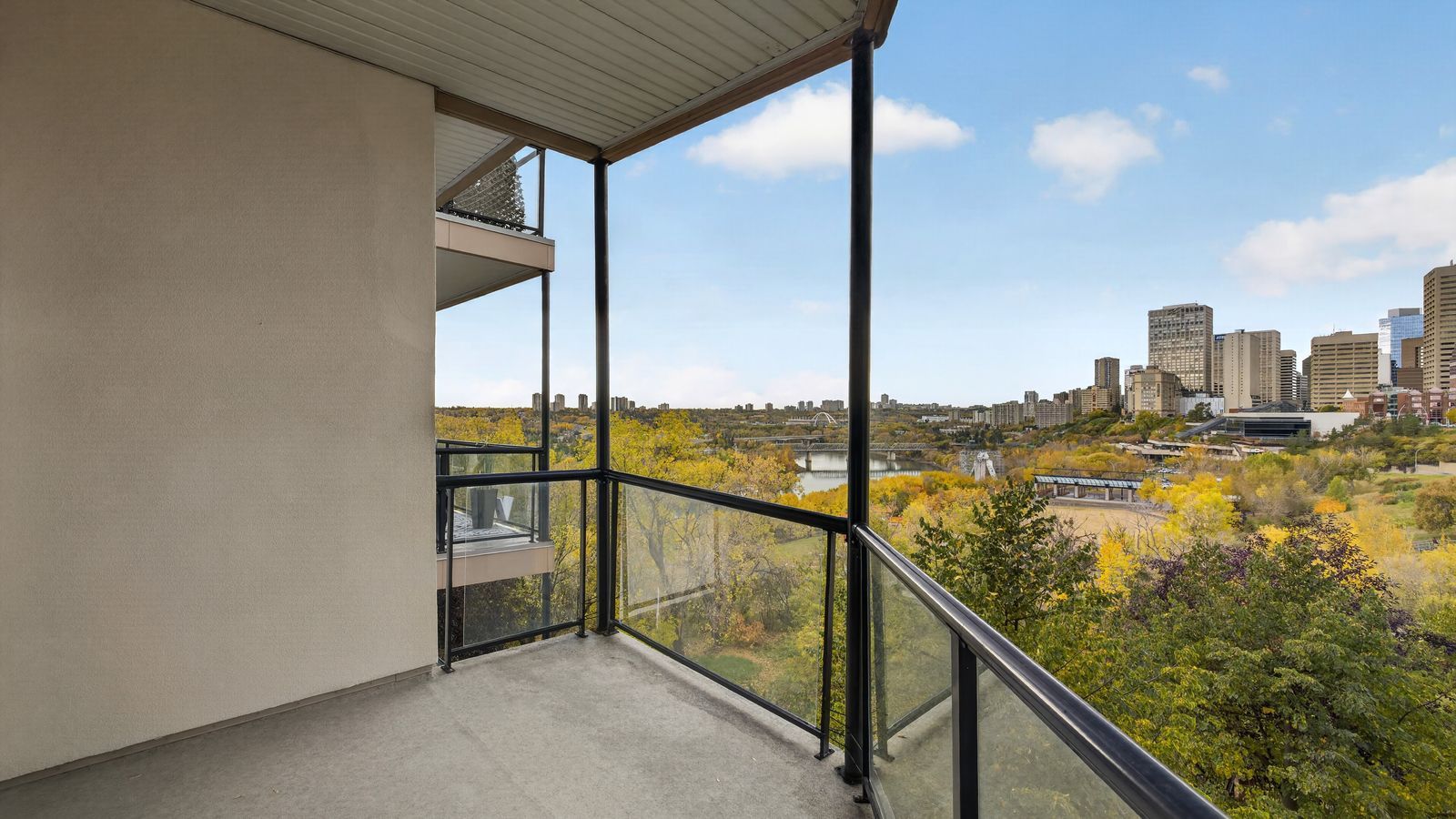
Pictured: the balcony at #412 9503 101 Avenue NW, Riverdale. Listed by Dario.
The buying process
Eight steps to your keys
Find the right agent
Choose someone you connect with and trust, who understands what you need. You deserve to be happy with this relationship.
Get pre-approved
Talk to a mortgage broker to find out what you can afford. They’ll ask for proof of income and assets, check your credit and verify your employment.
Decide what and where
Two-storey or bungalow? Attached or detached garage? Finished basement? Once we know, I’ll set up a custom search so you only see homes that fit.
Make an offer
I’ll ask for ID for everyone on the purchase contract. We’ll agree on a price and a negotiating strategy, then I’ll draft the offer.
Pending
The seller has accepted your offer, but the home isn’t sold yet. In most cases you have two weeks or less to firm up financing and complete inspections.
Property inspection
A property inspector checks that the home’s condition lines up with its value, so you know about any deficiencies before you commit.
Remove conditions
Once the inspection is done and your financing is approved, you remove conditions. The home is now legally sold to you.
Possession day
Lawyers and lenders transfer the funds. I’ll stay in touch with your lawyer and coordinate picking up your keys.
Pre-approval
Know your buying power first
A proper pre-approval simplifies your search and gives you confidence when it’s time to make an offer. Your mortgage broker will look at three things.
Your credit score
A higher score helps lenders see you as a strong candidate. Don’t take on new debt or finance anything new before you buy, such as a car, boat, camper or furniture.
Your assets and debts
Lenders look at your debt-to-income ratio, what you earn each month against your existing debts and costs, to make sure you can carry the payment.
Your employment history
Lenders want steady income and will generally want to see at least three months at your current job. Talk to your mortgage broker before changing jobs.
Using RRSP savings for your down payment? Moving those funds can take time, up to 90 days in some cases, so plan ahead. Need a mortgage broker? I can connect you with one I trust.
First-time buyers
Programs that can help you buy your first home
Federal programs as of October 2026. Ask your mortgage broker or accountant which ones you qualify for.
First Home Savings Account (FHSA)
Save up to $40,000, tax-free
Contribute up to $8,000 a year, to a lifetime limit of $40,000 per person. Contributions are tax-deductible, and qualifying withdrawals for your first home are tax-free.
RRSP Home Buyers’ Plan
Borrow up to $60,000 from your RRSP
Withdraw up to $60,000 from your RRSP toward your first home, then repay it over 15 years.
First-Time Home Buyers’ Tax Credit
Up to $1,500 back at tax time
Claim $10,000 on your tax return in the year you buy, for a non-refundable credit worth up to $1,500.
First-Time Home Buyers’ GST rebate
Up to $50,000 on a new home
Eligible first-time buyers can get back the full 5% GST on a new or substantially renovated home up to $1 million, with a reduced rebate up to $1.5 million. It applies to purchase agreements signed on or after March 20, 2025, and before 2031.
30-year amortization
Lower payments on an insured mortgage
First-time buyers, and anyone buying a newly built home, can choose a 30-year amortization on an insured mortgage instead of 25 years.
Insured mortgage limit
Less than 20% down up to $1.5 million
Mortgage default insurance is available on homes priced under $1.5 million, so you can buy with as little as 5% down on the first $500,000.
Program details change. Confirm current rules and your eligibility with the Canada Revenue Agency, your mortgage broker or your accountant before you rely on them. This is general information, not financial or tax advice.
Home styles
Find the layout that fits how you live
The style of a home shapes how you use it every day. Here are the layouts you’ll see most around Edmonton.
Bungalow
Everything on one main level, often with a full basement below. No stairs between the bedrooms and the kitchen.
Great for downsizers and anyone who wants fewer stairs.
Two-storey
Living spaces on the main floor and bedrooms upstairs, often with a bonus room. A popular style in Edmonton’s newer communities.
Great for growing families.
Bi-level
A split entry with short flights of stairs up to the main floor and down to a raised lower level with bigger windows.
Great if you want a bright lower level for family or guests.
Split-level
Three or four staggered levels joined by short flights of stairs. Common in established neighbourhoods.
Great if you like defined spaces on different levels.
Half duplex
One of two homes sharing a wall, often with its own yard and no condo fees.
Great for first-time buyers who want a yard.
Townhouse
A multi-level home in a row of attached units, often in a complex where exterior upkeep is shared through condo fees.
Great for busy professionals and first-time buyers.
Apartment condo
Single-level living in a low-rise or high-rise building, with shared amenities and condo fees that cover building upkeep.
Great for downsizers, investors and downtown living.
Acreage
A home on a large country lot outside the city, with room for a shop, big gardens or animals.
Great if you want space and privacy.
Deciding what to buy
Think about how you want to live
Your commute
Do you drive far for work, or does someone at home rely on transit? Do a test run of the route before you commit to an area.
Old house or new house
Older homes may need some elbow grease. New homes bring modern finishes and building practices, but you may live near construction for a while.
Walkability
How important is it to walk to schools, shopping and groceries? Think about what you want close by.
Community
Think about schools now and later, paths and green space for kids and pets, and the amenities that make a neighbourhood feel like home.
Must-not-haves
Most people know their wants. Think about what you don’t want, too. Sensitive to noise? Skip homes on busy roads.
Room to grow
A finished basement, a bonus room or a bigger lot can save you a move later. We’ll weigh today’s budget against tomorrow’s plans.
Your offer
The six parts of an offer
- Price
- The amount you’re offering for the home, including any agreed-upon chattels.
- Deposit
- Usually refundable if conditions aren’t met within the condition period. If all goes well, it’s applied to your down payment on closing.
- Terms
- Details such as the deadline for the seller to respond and any survey or Real Property Report requirements.
- Conditions
- Requirements that must be met before the purchase goes ahead, such as a home inspection, financing or the sale of your current home.
- Chattels and exclusions
- Items included or excluded, from appliances to window coverings and mirrors. We specialize in houses, not furniture sales, but I’ll do my best to accommodate your requests.
- Possession date
- The day title transfers and the funds are finalized. It has to fall on a weekday that isn’t a holiday.
The condition period
Your offer is accepted. Here’s what happens next.
You’re officially pending. You generally have about two weeks to meet the conditions in your purchase contract.
Financing
Finalize anything your lender still needs, such as an appraisal, employment letters, tax forms and proof of funds.
Property inspection
An inspector checks plumbing, electrical and mechanical systems, the roof, windows, doors, drywall, insulation and concrete, and points out outdated or unsafe materials.
Choosing a lawyer
Your lawyer usually gets involved once conditions come off, so choose one now. They check for liens, overdue taxes or utility bills, and title issues.
Payment estimator
Estimate your payment and closing costs
A quick estimate to help you set a budget. Your mortgage broker and lawyer will confirm your real numbers.
The starting rate is an example only. Use the rate your lender or mortgage broker quotes you.
Other closing costs to budget for
- Legal fees and disbursements
- Title insurance
- Home inspection
- Property tax and utility adjustments
- Condo document review, for condos
- Moving and utility hookups
Estimated monthly payment
$0 per month
- Down payment
- $0
- Minimum down payment
- $0
- Mortgage default insurance
- —
- Total mortgage
- $0
- Alberta Land Titles fees
- Transfer of land
- $0
- Mortgage registration
- $0
Estimate only. The payment covers principal and interest at a fixed rate compounded semi-annually, with standard mortgage default insurance premiums when you put less than 20% down. Alberta has no land transfer tax. Instead, Land Titles charges $50 plus $5 for every $5,000 of value to register the transfer and the mortgage. Property taxes, condo fees and utilities aren’t included. Rules and rates change, so confirm with your mortgage broker and lawyer.
Preparing to move
Get organized before possession day
Depending on your purchase contract, you’ll usually have 30 to 90 days to get ready.
- Lawyer
- Contact your lawyer at least a week ahead to confirm your closing appointment and what they need from you.
- Down payment and closing costs
- Have the funds ready when your lawyer asks for them.
- Movers
- Book movers for the day after possession, since the timing of the funds transfer can vary.
- Utilities
- Set up power, water and waste for possession day, and cable or Wi-Fi for the day after.
After you get the keys
My job doesn’t end at possession. Call me anytime for:
- Contractor and service recommendations
- Guidance on issues after you move in
- Updates on your home’s value
- Questions about the market
- Advice on buying an investment property
- Help when you’re ready to sell
My advice is fast, free and confidential.
Buyer FAQ
Common questions from buyers
What should I look for when touring a home?
Beyond finishes and layout, look at things that are harder to change: foundation condition, roof age, window seals and any smells that could point to moisture. I’ll help you look past the staging to what matters for resale and everyday living.
When is the best time of year to buy?
Anytime. Spring and summer bring more listings, but also more competition and higher prices. Fall and winter have fewer listings, but sellers in colder months are often more motivated. The right time depends on your timeline and what’s available.
Are open houses worth attending?
They’re a low-pressure way to see homes early in your search. When you’re serious about a home, book a private showing with me so you can take your time and ask detailed questions.
Can I back out after my offer is accepted?
During the condition period, yes. If a condition such as financing or the inspection isn’t satisfied, you can walk away. Once conditions are removed the deal is firm, and backing out can carry real financial and legal consequences. I’ll make sure you understand exactly what you’re agreeing to before conditions come off.
Why is the assessed value different from what I’m paying?
City assessments are generated by automated systems and often miss a home’s upgrades, features and condition. Market value is what buyers will pay right now, based on comparable sales, location and demand.
What happens if my financing falls through?
That’s why your offer includes a financing condition. If your lender can’t approve the mortgage within the condition period, you can walk away and your deposit is returned. A solid pre-approval up front lowers the chance of surprises.
Start your search
Get homes that fit, the day they’re listed
Tell me what you’re looking for and I’ll set up a custom MLS® search that emails you matching homes as soon as they hit the market.
- Only homes that match your must-haves
- New listings the day they hit the market
- My honest take on the ones worth seeing
Thank you.
Your listing alerts are on the way. I’ll set up your custom MLS® search and reach out within one business day to fine-tune it.
Want the Buyer’s Guide?
From pre-approval to moving day, by email.
Thank you.
Your guides are on the way. I’ll email them to you within one business day. Questions in the meantime? Call or text 780-710-8981.